
Active Warrants in Lawrence County
The official Lawrence County warrant source is the Magistrates & Warrants page on the local court site. That page explains that magistrates are part of the judicial branch and must exercise independent judgment when issuing arrest warrants. The warrant issuer must be neutral and detached from law enforcement. In practical terms, the magistrate does not simply approve an arrest request because a complainant wants one; the magistrate reviews a sworn deposition and decides whether probable cause exists.
No verified official Lawrence County online active-warrant database was located in the official court and county sources reviewed. The local warrant page gives a different fallback chain: file or obtain the correct incident/offense report, call the magistrate at (256) 974-2438 for process questions and appointments, use the Lawrence County Sheriff's Department for in-person questions when a person suspects a warrant exists, and contact municipal police or municipal court when the offense occurred inside a city. Once a warrant is served and a public criminal case exists, the Circuit Clerk or District Court record becomes the better source for court date, bond, and case status.
The most important local access rule is direct: the Lawrence County magistrate page says an arrest warrant is not a matter of public record until it is served. That means public lookup tools, court indexes, and clerk records may not show an unserved warrant. A person who suspects a warrant has been issued against them is told by the local page to appear in person at the Lawrence County Sheriff's Department.
Types of Warrants in Lawrence County
Warrant language can be confusing because different warrant types serve different purposes. The local magistrate page focuses on arrest warrants and summonses after probable-cause review, while the traffic and Protection from Abuse materials show other warrant-related situations. Search warrants, bench warrants, capias warrants, and federal warrants follow different procedures and may not appear in the same local public access channel.
- Arrest warrant - Issued after a neutral magistrate finds probable cause based on a sworn deposition or other required showing.
- Summons - Requires a person to appear in court without immediate arrest when the magistrate or court uses that process.
- Bench warrant - Often tied to a missed court date, missed payment, or failure to comply with a court order.
- Capias / failure-to-appear - A court order connected to failure to appear or answer a court obligation, including traffic matters when local rules allow a warrant.
- Search warrant - Authorizes a search rather than an arrest and is not the same as an active arrest warrant list.
- Federal warrant - Issued through a federal court or federal agency process, separate from Lawrence County District or Circuit Court.
Protection from Abuse violations can intersect with warrant and arrest rules. The Alabama Protection from Abuse Act is the state law framework behind PFA petitions and orders.
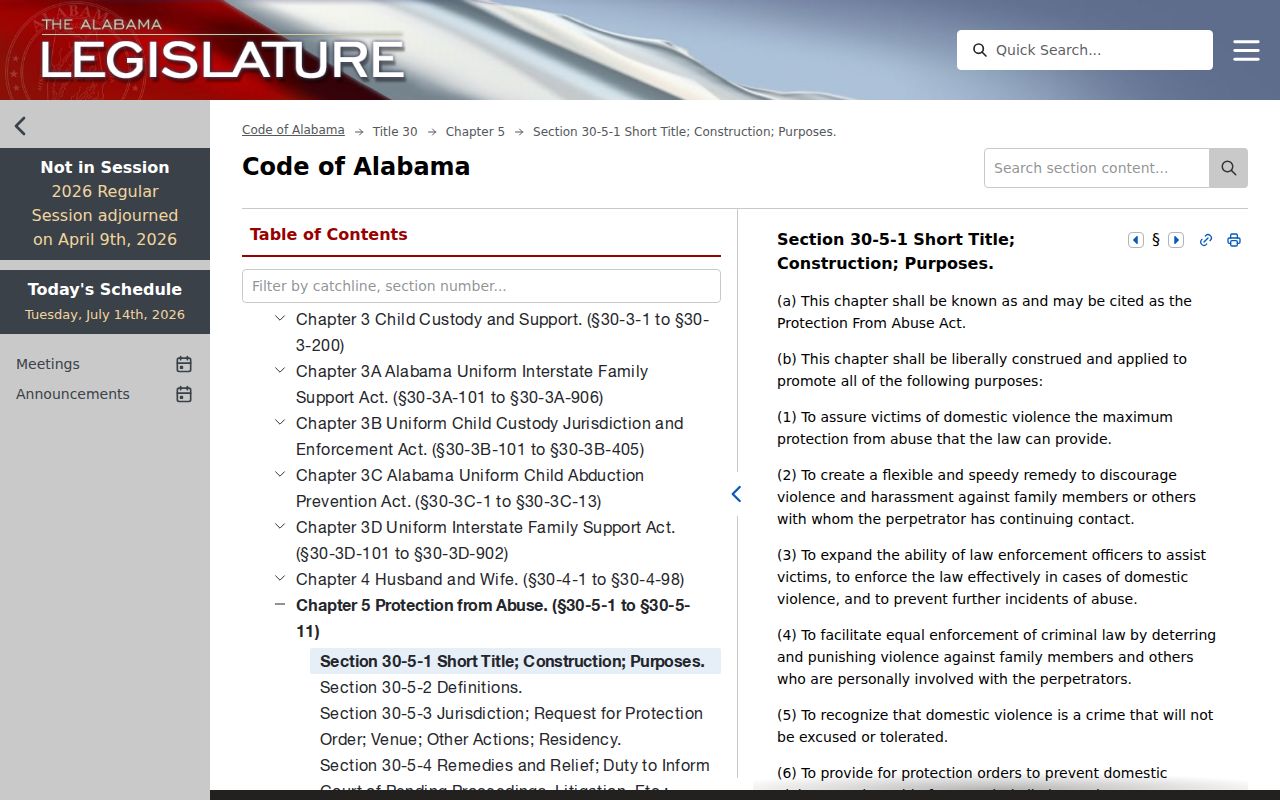
In Lawrence County, the PFA procedure matters because a violation may lead to contempt, misdemeanor consequences, arrest without a warrant when probable cause exists, or a warrant request through district or municipal court with a police report.
How to Search Lawrence County Warrants
A reliable Lawrence County warrant search starts by identifying what kind of warrant question is being asked. A person seeking a warrant against someone else follows the magistrate appointment process. A person who suspects a warrant exists against them follows the sheriff in-person instruction. A person researching a served warrant tied to a public case uses the Circuit Clerk, District Court, Alacourt ACCESS, or municipal court depending on where the case is filed.
- Do not rely on third-party warrant lists; no official Lawrence County online active-warrant list was verified in the official sources reviewed.
- If you suspect a warrant exists against you, follow the local instruction to appear in person at the Lawrence County Sheriff's Department.
- For process questions or to seek a warrant after filing the proper report, call the warrant magistrate at (256) 974-2438.
- If the offense occurred inside a municipality, start with that municipal police department for the incident report and that municipal court for city case questions.
- After a warrant is served, check the court record through Alacourt ACCESS or the Lawrence County Circuit Clerk for public case status, bond, court date, and disposition.
The process is intentionally split because no single public database answers every warrant question. The sheriff is the practical in-person channel for suspected outstanding warrants. The magistrate explains and conducts the warrant application process. The Circuit Clerk maintains court records after public cases exist. Municipal courts and municipal police handle many city-level misdemeanor and ordinance matters. Federal warrants are outside the county court process.
Lawrence County Warrant Search Status Channels
Because no verified official online active-warrant search form was located, the useful field table is a status-channel table rather than a web-form inventory. These are the details a person should have ready when contacting the sheriff, magistrate, clerk, or municipal court.
| Field or detail | Use it with | Required | Notes |
|---|---|---|---|
| Full legal name | Sheriff, clerk, municipal court | Usually | Use legal name and known aliases to avoid false matches. |
| Date of birth | Sheriff, jail, clerk | Often | Helps separate people with similar names. |
| Incident/offense report | Magistrate | Yes for warrant application | The local process says to file or obtain the report before seeking a warrant. |
| Offense location | Magistrate, sheriff, municipal police | Yes | Determines county versus municipal jurisdiction. |
| Case number | Circuit Clerk, Alacourt, municipal court | Helpful | Useful after the warrant is served and a public case exists. |
| Court date or citation number | District Court traffic, municipal court | Helpful | Failure to appear on a traffic citation may lead to a warrant and license consequences. |
What a Lawrence County Warrant Record Shows
A warrant record may include more than one source document. The local warrant process mentions the incident or offense report, sworn deposition, magistrate probable-cause review, and the resulting arrest warrant or summons. After service, the public criminal case record may add bond, first appearance, charge, court date, and disposition information. Before service, the local page says the arrest warrant is not public.
| Field | What It Shows |
|---|---|
| Incident/offense report | The sheriff or municipal police report that must be filed before a warrant application proceeds. |
| Complainant or victim details | The person reporting the alleged offense, subject to confidentiality limits and redaction. |
| Defendant or suspect | The person accused, with identifying details where allowed. |
| Offense description | The alleged conduct, location, and whether it is misdemeanor, felony, traffic, or worthless-check related. |
| Jurisdiction | Whether the matter belongs with county magistrate, sheriff, municipal police, municipal court, or another authority. |
| Sworn deposition | The complainant's statement under oath at the magistrate appointment. |
| Probable-cause decision | The magistrate's neutral decision on whether the legal threshold is met. |
| Warrant or summons | The process issued if probable cause is found. |
| Service status | Whether the warrant has been served; public access begins only after service under the local rule. |
| Bond and first appearance | Post-arrest release terms, bond amount, and initial court setting where public. |
| Related case number | The Circuit, District, traffic, or municipal case number once the matter becomes a court case. |
Warrant Magistrate Process
The Lawrence County Warrant Magistrate's Office has specific jurisdiction. It covers misdemeanors occurring outside city limits, felonies occurring in Lawrence County, traffic offenses occurring in Lawrence County that are often cited by a state trooper or county deputy, and worthless checks received in Lawrence County. If the offense occurred inside a municipality, the person should file the report with that police department instead.
The sequence is practical and strict. File an incident or offense report first. For a misdemeanor outside municipal limits, obtain a copy of the report from the Sheriff's Department. For a felony, contact the municipality with jurisdiction or the Sheriff's Department and speak with an investigator. Because warrant matters are complicated, the local page gives the magistrate number, (256) 974-2438. After the report is ready, call to schedule an appointment. At the appointment, the complainant is placed under oath and fills out a deposition. If the magistrate finds probable cause, an arrest warrant or summons issues.
| Step | Action | Local note |
|---|---|---|
| 1 | File the incident/offense report. | Use the Sheriff's Department for county matters or municipal police for city matters. |
| 2 | Get the report copy or speak with an investigator. | Misdemeanor and felony instructions differ. |
| 3 | Call the magistrate at (256) 974-2438. | Appointment is required after the report step. |
| 4 | Give a sworn deposition. | The complainant is placed under oath. |
| 5 | Magistrate reviews probable cause. | The magistrate must remain neutral and detached. |
| 6 | Warrant or summons issues if probable cause exists. | The process has no cost, but charges generally are not dropped except in extenuating circumstances. |
What to Do If You Have an Outstanding Warrant
The local instruction is not to search a public county warrant list; none was verified. If someone suspects a Lawrence County warrant has been issued against them, the local magistrate page says they must appear in person at the Lawrence County Sheriff's Department. If the matter may be a city misdemeanor, municipal ticket, or ordinance case, contact the municipal court or police department with jurisdiction. If the warrant followed a county traffic citation, the District Court traffic record and citation history matter. If a warrant has already been served, the Circuit Clerk or District Court can help with public court date, bond, and case-record access.
Important: Consider speaking with a licensed Alabama attorney before appearing on a suspected warrant or making case statements.
Traffic, PFA, and Municipal Warrant Issues
Traffic warrants are a common source of confusion. Lawrence County's traffic page says a citation requires the defendant to appear before Lawrence County District Court unless the citation is resolved before the court date. If the defendant fails to pay or otherwise dispose of the case and fails to appear, a warrant may be issued, ALEA may suspend the driver's license, the fine may be increased, and any bond may be forfeited. The court date on the ticket is not a trial date; a defendant who wants a trial must appear on the court date to request one.
Protection from Abuse matters can also produce warrant-related consequences. The local PFA page says a violation can lead to criminal misdemeanor charges or contempt. Law enforcement may arrest without a warrant when probable cause exists for certain PFA violations, and a victim may request a warrant through district or municipal court with a police report. PFA records can include confidential victim-address protections, so public record access may be narrower than in an ordinary misdemeanor case.
Municipal limits matter. A misdemeanor inside a city normally starts with that municipal police department and municipal court unless it is linked with a felony or unusual circumstance. A misdemeanor outside city limits belongs in the county warrant-magistrate path. Felonies occurring in Lawrence County are within the county process, though felony investigation may involve the Sheriff's Department or municipal investigators depending on where the event occurred.
Anonymous Tips and Public Safety Contacts
The research did not verify a Lawrence County-specific Crime Stoppers warrant tip line or official app-only warrant search. Build content should not invent one. For official warrant questions, use the Lawrence County Sheriff's Office, the warrant magistrate phone number, the municipal police department with jurisdiction, or the court record channel after service. For emergency situations, use emergency law-enforcement channels rather than a records search.
Because no official Lawrence County sheriff or major local police app listing was verified in the official sources reviewed, no app-only active-warrant search, most-wanted list, records-request portal, or tip tool should be described as available. If a later official sheriff page confirms an app or public warrant list, the page should be updated with the exact official link and access limits.
Restricted Lawrence County Warrant Records
Unserved warrants are the main Lawrence County restriction because the local magistrate page says an arrest warrant is not public until served. Juvenile warrant-related records are also restricted under Alabama juvenile confidentiality law. Sealed, expunged, mental-health, adoption, and certain PFA-related records may be inaccessible or redacted. Federal warrants, search warrants, and investigative records may follow different public-access rules and are not ordinary Circuit Clerk docket lookups.
After service, the public record may still be partial. It may show the warrant or summons, related charge, court date, bond, and docket events, but not every underlying law-enforcement detail. Certified copies and official court records come from the office that owns the file. The Circuit Clerk handles Circuit and District Court records; municipal courts handle city cases; the Sheriff's Office handles law-enforcement and jail records; the magistrate handles the warrant application process.