
Criminal Court Records in Lawrence County
A criminal court record in Lawrence County is different from a bare arrest entry. It is the court file maintained after the State, a prosecutor, or the proper charging authority places a criminal accusation into the judicial system. The Lawrence County Circuit Clerk, Sandra Parker Ligon, is the official record keeper and business manager for both Circuit Court and District Court proceedings at the Lawrence County Judicial and Administrative Center, 14451 Market Street, Suite 300, Moulton, Alabama 35650. The clerk's office phone number listed in the research is (256) 974-2432.
Lawrence County is part of Alabama's Thirty-Sixth Judicial Circuit. The local judges page lists Honorable Callie Waldrep as Presiding Circuit Judge and Honorable Angela D. Terry as District Judge. Circuit Court handles felony criminal cases, larger criminal proceedings, domestic relations, major civil matters, and appeals from lower courts where applicable. District Court handles many misdemeanors, traffic matters, preliminary hearings, warrant-magistrate functions, small claims, and lower-dollar civil cases. Municipal courts may hold city ordinance, city traffic, and some misdemeanor records when the conduct occurred inside municipal limits.
The distinction matters because a search can fail if the record is in the wrong venue. A felony arrest from Lawrence County normally leads toward Circuit Court after the required preliminary and charging steps. A misdemeanor outside city limits may be handled through the county District Court process. A misdemeanor inside a city is commonly a municipal-court matter unless a felony in the same incident or unusual circumstance moves the case elsewhere. A court record may also begin after a warrant or summons issues through the magistrate process.
The state expungement framework is one reason criminal records need to be read by exact case outcome. The Alabama expungement statute explains eligibility concepts for clearing certain criminal records after qualifying outcomes.
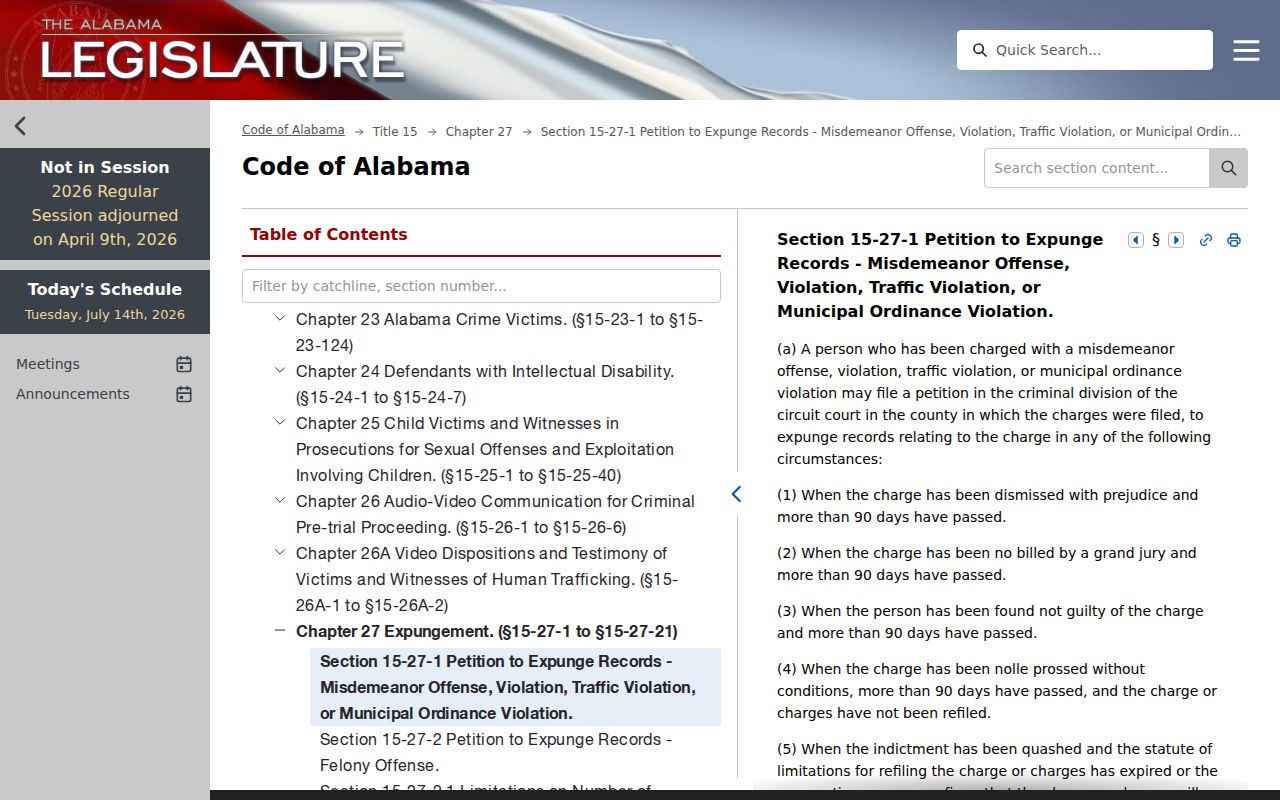
For Lawrence County users, that statute is most useful after the exact charge, disposition, and court division have been identified from the case record or clerk file.
How to Search Lawrence County Criminal Court Records
The central official online channel for Lawrence County Circuit and District Court case information is Alacourt ACCESS, also called Just One Look. The Circuit Clerk page identifies Just One Look as the on-demand access point for Alabama State Trial Court Records and notes that fees are required, and the county court homepage at lawrence.alacourt.gov links the local court divisions. It is a statewide paid access system, not a free county-built criminal docket search. For older files, certified copies, restricted files, or records not visible through the portal, the Circuit Clerk remains the practical fallback.
- Start with the correct venue: Circuit Court for felony cases, District Court for many misdemeanors, preliminary hearings, and county traffic-related criminal matters, or municipal court for city ordinance and city misdemeanor cases.
- Use Alacourt ACCESS / Just One Look for paid statewide trial-court lookup where the record is available through Alabama's court system.
- Search with the defendant's legal name, exact case number if known, approximate filing year, Lawrence County as the county filter, and the correct court or division when the portal allows filtering.
- Read the docket as a chronology first: filing, warrant or summons, bond, arraignment, hearings, motions, plea, disposition, sentencing, fines, costs, and probation entries.
- Request certified copies, older records, or records not downloadable online from the Lawrence County Circuit Clerk at 14451 Market Street, Suite 300, Moulton.
Alacourt results may not show every document image, and public access can be narrower than party access. If the search involves a new arrest, the sheriff or jail may know booking and bond details before the court docket is fully updated. If the search involves an unserved warrant, the local magistrate page says that an arrest warrant is not a public record until served, so the absence of a result does not prove that no warrant exists. For the arrest-to-charge pathway rather than the full case file, see Lawrence County arrest records and court charges.
Stages of a Criminal Case
A Lawrence County criminal case can begin several ways. A person may be arrested by the Sheriff's Office, a municipal police department, or another agency. A citizen complaint may start with an incident or offense report, followed by a sworn deposition before a magistrate. The magistrate then decides whether probable cause supports an arrest warrant or summons. After charges reach the court, the docket becomes the public-facing chronology, subject to confidentiality rules.
Case flow: Incident or Arrest › Warrant or Summons › Charge Filed › First Appearance / Bond › Arraignment › Pretrial / Motions › Plea or Trial › Disposition › Sentencing
| Stage | What Happens |
|---|---|
| Incident or arrest | A sheriff's deputy, city police officer, state trooper, or complainant creates the law-enforcement record that may lead to booking, a warrant request, or a summons. |
| Warrant or summons | The magistrate reviews a sworn deposition for probable cause. If probable cause exists, an arrest warrant or summons may issue. |
| First appearance / bond | The court or magistrate addresses custody, bond, appearance obligations, and next court settings after arrest or service. |
| Arraignment | The defendant is formally advised of the charge and enters a plea or receives a later setting according to the court's procedure. |
| Pretrial / motions | The docket may show attorney appearances, discovery activity, continuances, motions, subpoenas, and hearing settings. |
| Plea or trial | The case may resolve by plea, dismissal, trial verdict, or another court-approved disposition. |
| Sentencing | If the defendant is convicted, the record may show jail or prison time, probation, fines, court costs, restitution, license consequences, or other conditions. |
Some criminal matters move from local court into federal court only when federal jurisdiction applies. The U.S. District Court for the Northern District of Alabama is the federal trial court for this region, separate from Lawrence County Circuit and District Court.
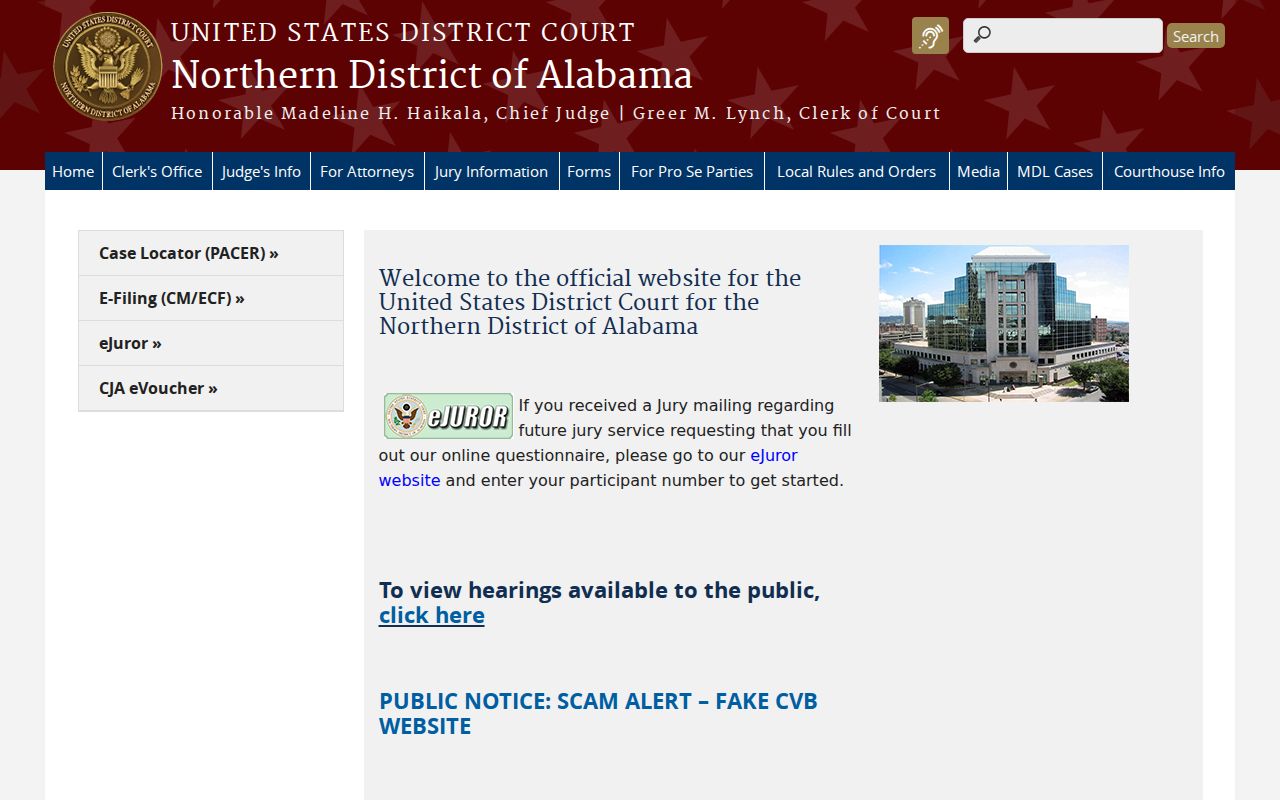
That federal source should not be confused with Alacourt ACCESS; most county criminal charges remain in Alabama trial-court records unless a federal charge is filed.
What a Lawrence County Criminal Court Record Shows
Typical visible fields come from the docket and case file. The exact display can vary by portal, court division, user access, and whether the record has been sealed, expunged, or restricted. A useful criminal search starts with the case number and defendant name, then checks the court division, charge list, filing date, bond status, hearing history, disposition, and financial obligations.
| Field | What It Shows |
|---|---|
| Case number | The clerk-assigned identifier used when contacting the court, requesting copies, or matching multiple docket entries. |
| Court / division | Whether the matter is in Circuit Court, District Court, traffic, criminal, juvenile, municipal court, or another division. |
| Defendant | The person charged, usually with name and limited identifying information where public display permits it. |
| Charges | The offense title, level, statute or code reference where listed, and whether the charge was original, amended, reduced, or dismissed. |
| Warrant or summons | Whether a warrant, summons, or service event appears after probable-cause review or another court action. |
| Bond | Bond amount, bond type, forfeiture, release condition, or custody status where public and entered in the court file. |
| Hearings | Court dates, setting type, continuances, trial requests, motion hearings, and first appearance activity. |
| Plea | Guilty, not guilty, or other plea entries as shown by the court record. |
| Disposition | Dismissed, guilty, acquitted, nolle prosequi, transferred, or another final or interim outcome. |
| Sentence and costs | Jail, prison, probation, fines, court costs, restitution, license consequences, and payment history where public. |
Charges vs. Convictions
A charge is an accusation placed into the criminal process. A conviction is a final outcome based on a guilty plea, verdict, or other court action that legally establishes guilt. Lawrence County records can show charges that were later dismissed, reduced, amended, or not prosecuted. That is why the disposition field is as important as the charge title.
| Charge | Conviction | |
|---|---|---|
| Stage | Accusation after arrest, warrant, summons, complaint, indictment, or prosecutor filing. | Final or adjudicated outcome shown by plea, verdict, or judgment. |
| Proof level | Often tied to probable cause or formal charging review. | Based on the criminal burden and court-approved resolution. |
| Record reading | Look for amended, dismissed, pending, and reduced entries. | Look for disposition, sentence, probation, fines, and court costs. |
| Access limits | May be hidden if juvenile, sealed, expunged, or still an unserved warrant matter. | May also be restricted by expungement, juvenile confidentiality, or court order. |
Juvenile confidentiality is a separate access rule, not just a search inconvenience. The Alabama juvenile record confidentiality statute explains why youth-court records are not ordinary public criminal dockets.
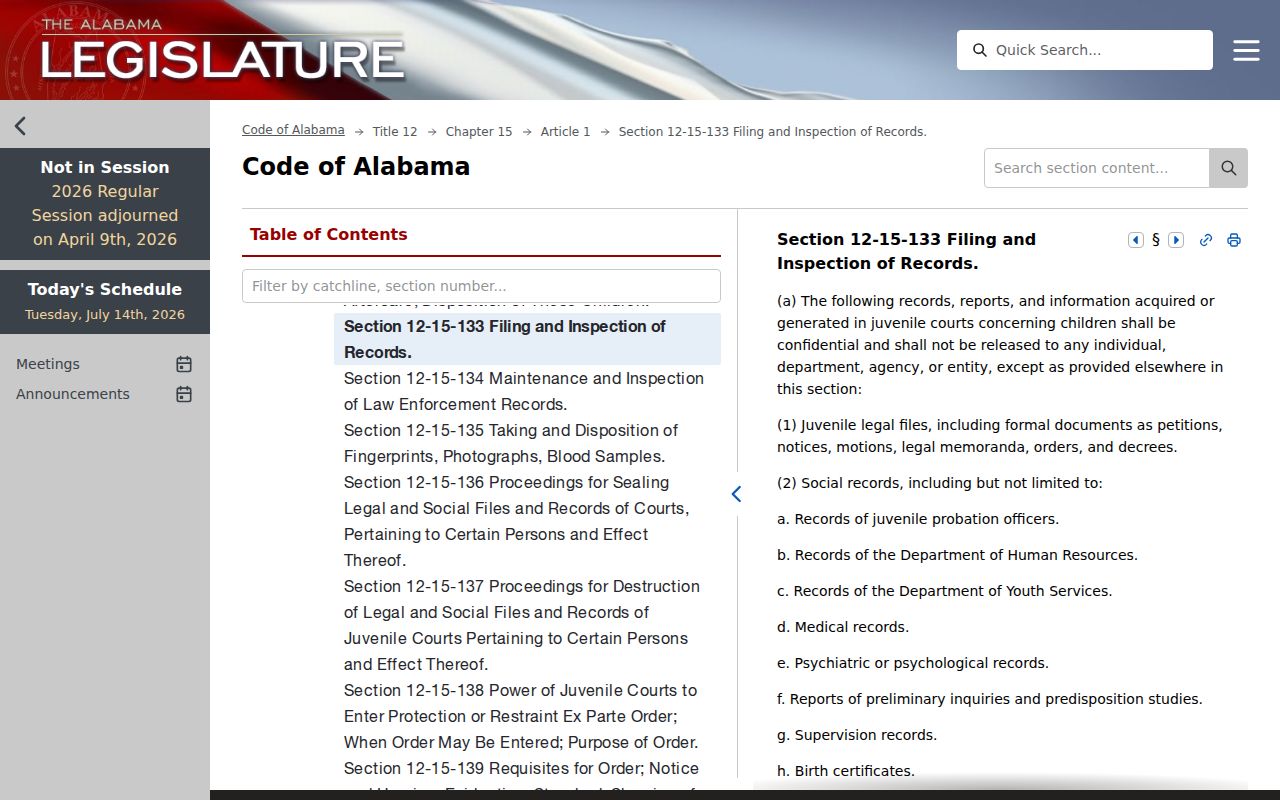
For Lawrence County searches, juvenile matters should be treated as restricted even when the Circuit Clerk lists juvenile as a record division.
Reading Dispositions and Sentences
The disposition tells the reader what happened to the charge. Common outcomes include guilty, not guilty, dismissed, nolle prosequi, amended, reduced, transferred, or pending. A single arrest can produce multiple charges with different outcomes, so the record should be read charge by charge rather than as one broad label. A guilty disposition may be followed by sentencing fields; a dismissed charge may still appear unless it is later expunged or otherwise restricted.
Sentencing entries can show jail time, prison time, probation, fines, court costs, restitution, license consequences, and payment obligations. A District Court traffic-related criminal matter may also connect to Alabama Law Enforcement Agency consequences such as license suspension when the local traffic page says failure to appear or failure to resolve the citation can trigger that result. Bond forfeiture may appear when the defendant misses required appearances.
Sealed vs. Expunged Records
Sealed and expunged records are not ordinary public lookup records. Alabama Code Section 15-27-1 and related expungement provisions control eligibility for clearing certain criminal records. The practical sequence is to identify the arresting agency, charge, case number, disposition, and date; compare the outcome against Alabama eligibility rules; file in the proper court if eligible; serve required agencies; and wait for objection or hearing steps. The Circuit Clerk can explain filing procedure, but cannot give eligibility advice.
| Sealed | Expunged | |
|---|---|---|
| Public visibility | Hidden or restricted from ordinary public access by law or court order. | Public-facing court, law-enforcement, and criminal-history access should be restricted according to the expungement order. |
| Record existence | The record may still exist for limited court or agency use. | Internal agency records may not vanish instantly; the order controls public access and agency handling. |
| Law enforcement | Limited official access may remain depending on the order or statute. | Access is restricted but may remain available for purposes allowed by Alabama law. |
| Eligibility | Depends on statute, court order, juvenile status, confidentiality rule, or case type. | Depends on Alabama expungement law, outcome, waiting periods, and statutory conditions. |
Public Access to Criminal Court Records
Alabama Code Section 36-12-40 gives Alabama citizens a general right to inspect and copy public writings, but it does not override confidentiality rules. Lawrence County criminal case access depends on the office that owns the record, the case type, and any restriction. Circuit and District Court case files go through the Circuit Clerk and Alacourt ACCESS where available. Probate files go through the Probate Judge, not the Circuit Clerk. City ordinance and municipal misdemeanor files may be held by the municipal court.
Key Statutes:
Alabama Code § 36-12-40 - Alabama citizens generally may inspect and copy public writings, subject to statutory limits.
Alabama Code § 15-27-1 - Alabama expungement eligibility affects whether qualifying criminal records remain publicly available.
Alabama Code § 12-15-133 - Juvenile legal and social records are confidential and are not ordinary public criminal records.
Federal criminal records use a different access system. The PACER federal court record access service is the national portal for federal dockets and documents.
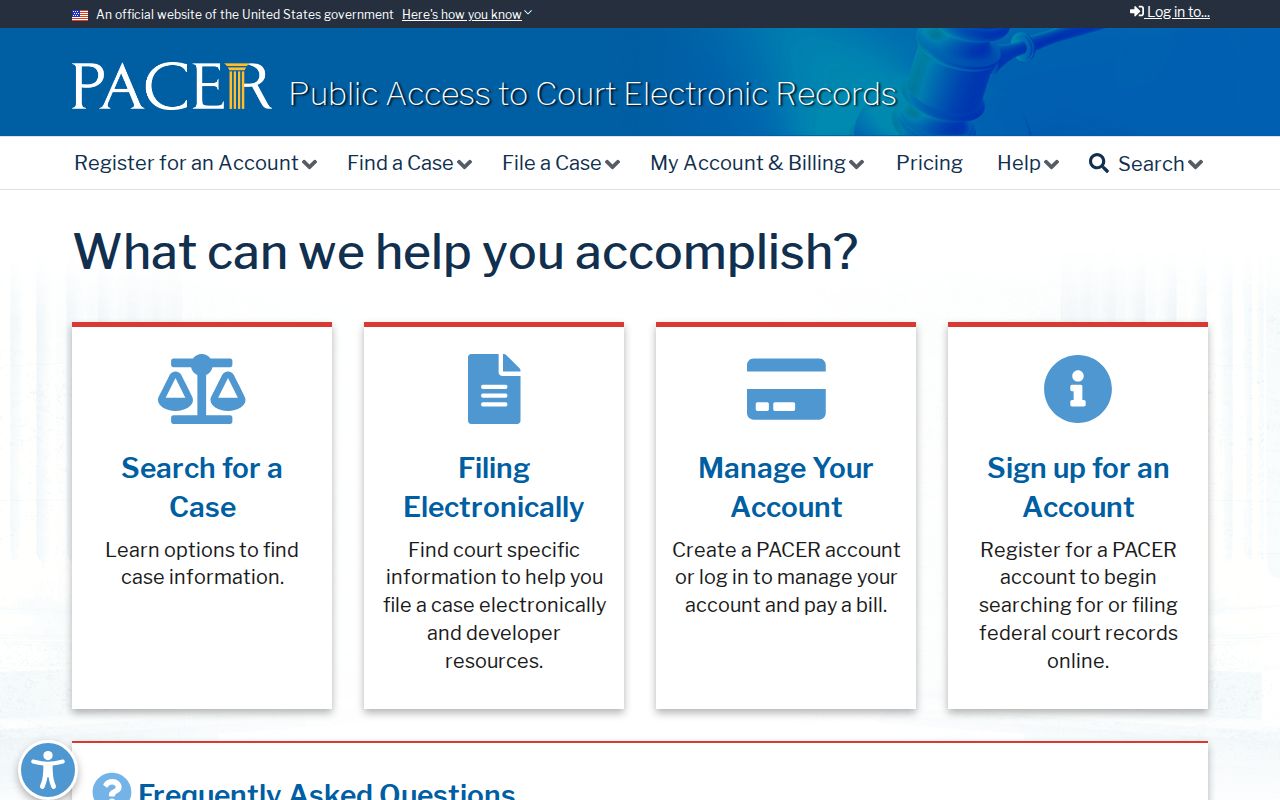
PACER is relevant only when a case is in federal court; Lawrence County Circuit and District Court records remain in Alabama's trial-court record channels.
Background Check Considerations
A public docket search is not the same as a regulated employment, tenant, credit, insurance, or licensing background check. Public criminal records can be incomplete, delayed, restricted, or misread if the searcher stops at the charge title and misses the disposition. A compliant background check may require identity verification, consent, dispute procedures, and a consumer reporting agency that follows the Fair Credit Reporting Act.
Important: Do not use public lookup notes here for credit, employment, tenant, insurance, or other FCRA-regulated decisions.
Restricted Criminal Court Records in Lawrence County
Several criminal-adjacent records are restricted or only partly public. Juvenile legal and social records are confidential under Alabama Code Section 12-15-133. Expunged records should not be described as available through normal public search. Sealed files, adoption records, mental-health proceedings, confidential victim addresses in PFA filings, and sensitive identifiers may be absent or redacted. The Lawrence County magistrate page also says an arrest warrant is not a public record until served.
Protection from Abuse records can create criminal consequences if violated, but the PFA materials also include confidentiality rules. The local PFA page says a victim's home address, work address, phone number, and related information may be deleted from records filed with the court. A PFA violation can lead to arrest without a warrant when probable cause exists, or a victim may request a warrant through district or municipal court with a police report.
Electronic filing and federal case management are separate from Lawrence County's local clerk counter. The Northern District CM/ECF system supports federal filing and access functions for authorized users in the federal court system.
Local criminal case questions still begin with Alacourt ACCESS or the Lawrence County Circuit Clerk unless a federal case number or federal charging document exists.